SnoopyStyle
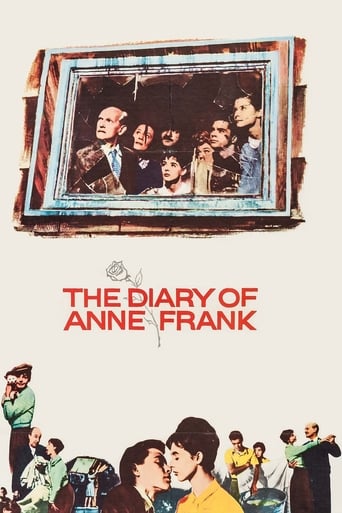
Based on the famous diary and the stage play, this is the story of one of the most well known victim of the Nazis. In 1942, she receives the blank diary on her 13th birthday. Soon, the family is hiding in the attic of her father's business with others. A few employees would help them stay hidden for over 2 years before they are discovered by the Nazis.Surprisingly, there is real tension especially during the robberies. The quiet brings a heighten intensity. The cast's acting is generally great. There is a poignancy with this first film production of the material. The only drawback is Millie Perkins. Her inexperienced acting actually works for her in this case although as a twenty year old, playing Anne at 13 is a little off. She doesn't have the youth to play the character's brattiness. It's a minor problem in an otherwise terrific production.
Desertman84
The Diary of Anne Frank is a film based on the Pulitzer Prize winning play of the same name, which was based on the diary of Anne Frank. It was directed by George Stevens, with a screenplay by Frances Goodrich and Albert Hackett.It is the first film version of both the play and the original story, and features three members of the original Broadway cast.The movie was based on the personal diary of Anne Frank, a Jewish girl who lived in a hiding place with her family during World War II. All her writings to her diary were addressed as 'Dear Kitty'. The diary was published after the end of the war by her father Otto Frank. By this time all his other family members were killed by the Nazis.This is the autobiographical drama of a young Dutch Jewish girl hiding from the invading Nazis during World War II. Anne and her family share a claustrophobic attic with another family. Tension is often unbearable, as the people hiding know that their discovery by the enemy could lead to almost certain death at the hands of their captors. They also must contend with the Dutch Gestapo or "Green Police," who will turn them over to the Nazis if discovered. Dutch nationals risk their lives by hiding the family for two years. The group, despite the horror and crowded conditions, still find time for celebrations of Hanukkah and rejoice quietly in the small attic that has become their world. The story is told from the narrative perspective of Anne, a young girl hoping to live to womanhood. A poignant drama bringing us into the lives of Anne Frank, whose diary inspired millions seeking to understand why such a sweet, innocent child could be murdered in the Holocaust.It remains a potent statement about the horrors of war and a valid testament to the girl who could answer them by writing, 'I still believe, in spite of everything, that people are really good at heart.' Also,Mr. Stevens has done a superb job of putting upon the screen the basic drama and shivering authenticity of the Frances Goodrich-Albert Hackett play, which in turn caught the magnitude of drama in the real-life diary of a Jewish girl.
Robert J. Maxwell
It's a splendidly done movie, a tale of eight Jews hiding in a Dutch attic for two years during the war, effectively directed by George Stevens and magnificently photographed by William Mellor.And I can't watch it very often because I know how it's going to end and it's embarrassing to be moved. I feel the same way about some other tragedies. I want to warn Janet Leigh before she steps into the shower in "Psycho." I want to tell Montgomery not to send the Polish airborne into the hellish cauldron of Arnhem. I want Vincent and Paul to found their artists' colony in Arles. I don't want to watch Brutus going around begging for one of his friends to run him through with his own sword. I want to grab Romeo and tell him Juliet isn't really dead. I want Stanley Kowalski to shut the hell up and let Mitch marry Blanche DuBois, not that he'd listen.On top of that, I can't just dismiss this as just a movie, because, before that it was a play, and before that it was an historical event. Well, mostly. Someone went through the historiography of Anne Frank's diary and found it had been sanitized over the years, first by Mr. Frank, then by the playwrights. She was pretty candid about her sexual development, and not nearly as forgiving as the movie makes her out to be. She was more nearly human than the figure we see on the screen.Millie Perkins is Anne. She's not bad considering her age but there are some painful moments too. Everyone else is professional at least. The director, George Stevens, started his career with Laurel and Hardy two reelers and masterpieces like "Kentucky Kernels" but went on to develop an extremely effective directorial approach that was his alone in movies like "Shane" and "A Place In The Sun." He's very good here and uses the Cinemascope screen like a master.There are moments of suspense, terror, sentiment, and even some comedy, but the film can't escape it's historical roots. How could civilized human beings do things like this to one another?
TheUnknown837-1
A handful of minutes ago I finished watching for the first time "The Diary of Anne Frank", which is the second movie adaptation of this tear-jerking true story that I have seen. A handful of minutes ago, I also discovered that Miep Gies, the last survivor of the story of Anne Frank, passed away very recently (January 11, 2010). So from the combination of the emotional power I felt from the movie and the emotional strike I've just been dealt, I more than enthusiastically commit myself, though tired and wanting to sleep, to writing this review for a superb, very powerful film by the great George Stevens.For those not familiar with the story, Anne Frank was a Jewish girl whose family went into hiding with another family and a single man during the times of World War Two. For two years, they lived in the attic over the workshop of friends before they were discovered by Nazis and deported into concentration camps, from which only Anne Frank's father survived. Anne, however, kept a diary detailing her time in hiding. It was published, subsequently adapted into a play, and from that came this marvelous, emotionally powerful movie.George Stevens movie takes a daring move by telling us the outcome of the movie at the beginning. We are told what to look for and what to wait for, and most of the remaining three hour-running time is then dominated by a flashback. In it, we get a real sense of the mixed emotions the real Anne Frank and her companions would have felt. Optimism and pessimism jump about with changing circumstances and at times we are so hopeful that the characters will survive even though we know that they will be caught and all save Otto Frank, Anne's father, will die.Apart from the movie's success at pulling at our heart strings and changing tones from optimistic to pessimistic in an instant, it also scores high due to a remarkable ability to generate suspense. We know right from the start that they will be caught
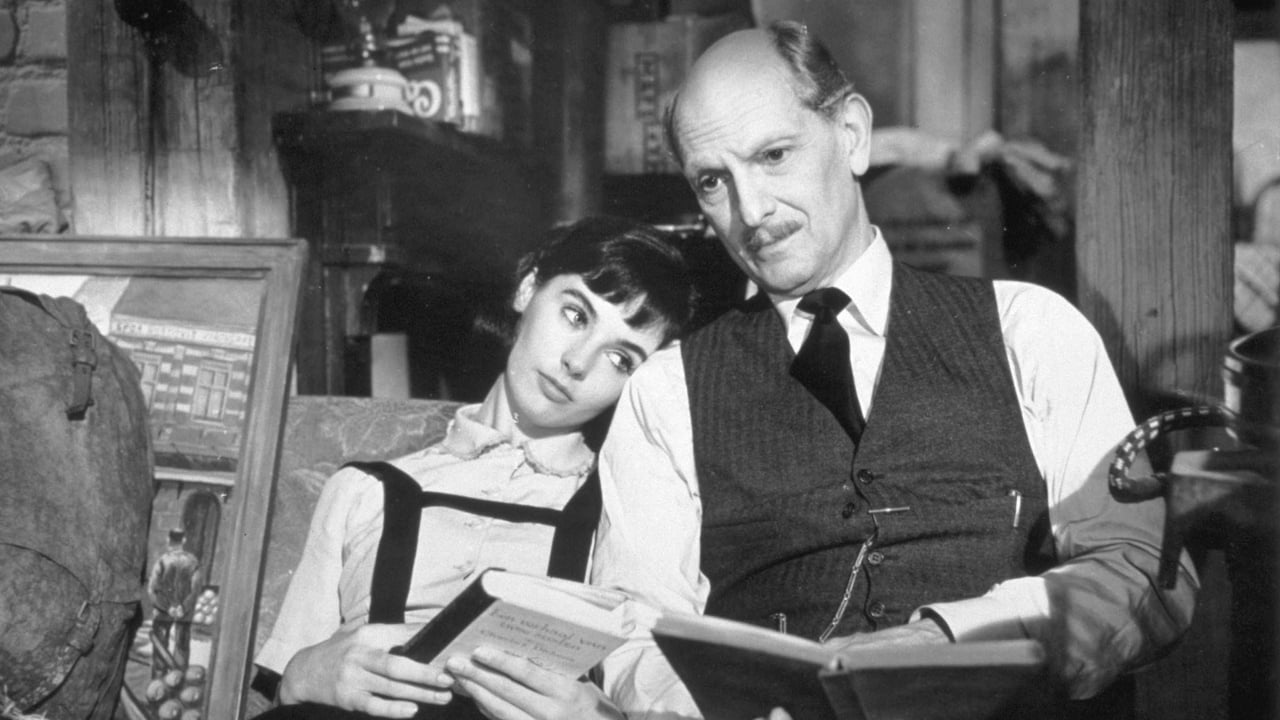
the suspense is waiting for it to happen. George Stevens' fabulous directing and use of silence and stress of sound really generates effective tension, allowing minute after minute to go by and our eyes refuse to leave the screen. The only regrets I have about Stevens' directing style is his trademark use of the camera being able to pass through walls and ceilings, which I have never found in any movie to be convincing. But in terms of the emotional scenes and just making an artistic movie, he succeeds with brilliance.Anne Frank is portrayed competently by Millie Perkins as a charismatic if somewhat eccentric young woman who dreams of a future she will never have the chance to strive for. Unfortunately, the only real weakness in the movie apart from its stretched running time is not Perkins' performance, but her character. The way Anne Frank is written, she actually comes off as a little dull. What we do get from her comes from Perkins' performance. However, this is made up by the supporting cast. Shelley Winters, who won the Oscar for Best Supporting Actress, is especially good in the picture as is Richard Beymer (whom you will remember as Tony from "West Side Story"), Ed Wynn, and Joseph Schildkraut who I think gives the best performance as Anne's father. These characters are all well-played and are well-rounded to get us to believe in them as human beings. If only the writers had stressed the presence of Anne with more than just dialogue, then we would have had a near-perfect film."The Diary of Anne Frank" is a superb, tautly-directed movie. There are some slow parts especially in the middle of the movie, but it is overall a very overwhelming film experience. The movie is more than fifty years old now and it has more power than a great many so-called tearjerkers that I've seen come out in recent years. The story of Anne Frank is an immortal tale and part of the reason why this movie tugs at our heart strings so powerfully is because we know it's true. This is one of those movies that keeps that in mind and uses it to an advantage rather than simply relying on that fact to save the day. It's a most commendable motion picture.